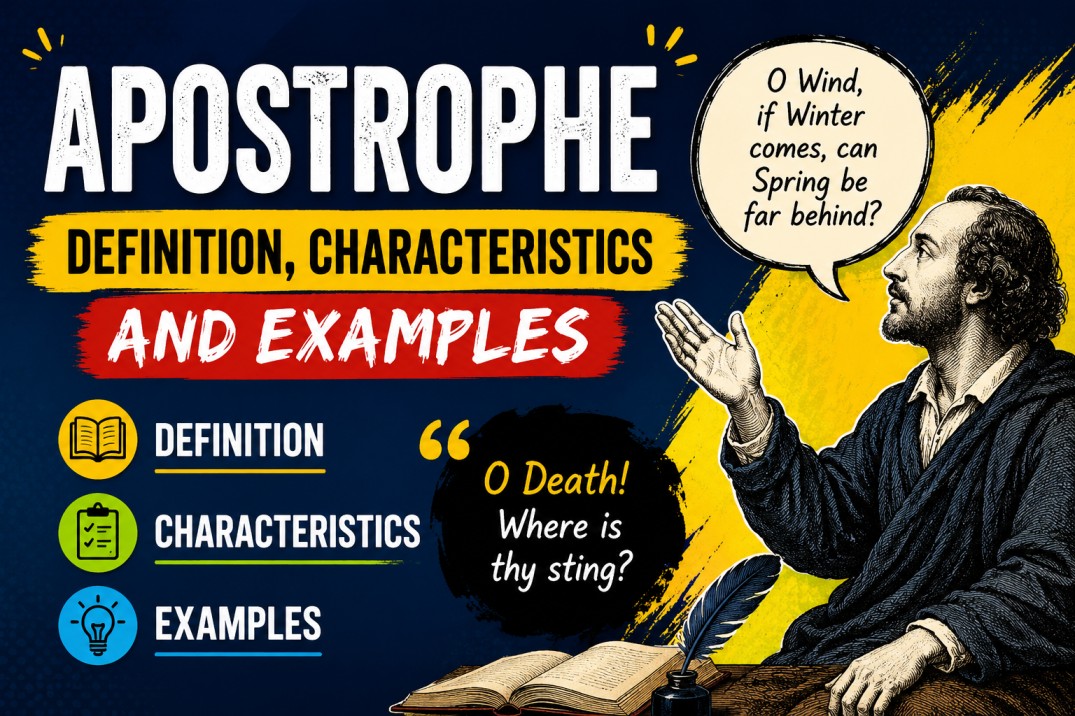

Definition of Apostrophe:
Apostrophe is a figure of speech in which a speaker directly addresses a person or personified thing, either present or absent. Its most common purpose in prose is to give vent to or display intense emotion, which can no longer be held back.
Characteristics of Apostrophe
- Direct Address: The speaker directly speaks to someone or something not physically present. Example: “O Death! Where is thy sting?”
- Addressing Non-living or Abstract Things: Abstract ideas like love, time, death, liberty, or nature are treated as living beings. For example: “O Liberty! What crimes are committed in thy name!”
- Expression of Strong Emotion: Apostrophe is often used to express intense feelings such as sorrow, love, anger, admiration, or despair.
- Use of Exclamatory Words: Words like “O”, “Oh”, or “Ah” are commonly used. Example: “O Moon, guide me through the night.”
- Personification: Here, non-human or abstract things are often personified and given human qualities.
- Common in Poetry and Drama: Poets and dramatists frequently use apostrophe to create emotional intensity and dramatic effect. It makes the expression more vivid, emotional, and imaginative for readers.
Examples from Literature:
- Is this a dagger which I see before me,
The handle toward my hand? Come, let me clutch thee.
I have thee not, and yet I see thee still.
Art thou not, fatal vision, sensible
To feeling as to sight? (Macbeth by William Shakespeare) - “O, pardon me, thou bleeding piece of earth, / That I am meek and gentle with these butchers! / Thou art the ruins of the noblest man / That ever lived in the tide of times.”, William Shakespeare, Julius Caesar, act 3, scene 1
- “Death, be not proud, though some have called thee / Mighty and dreadful, for thou art not so.”, John Donne, Holy Sonnet X
- “To what green altar, O mysterious priest, / Lead‘st thou that heifer lowing at the skies, / And all her silken flanks with garlands drest?”, John Keats, Ode on a Grecian Urn.
Also read Commedia dell’arte: Definition, Characters and Examples