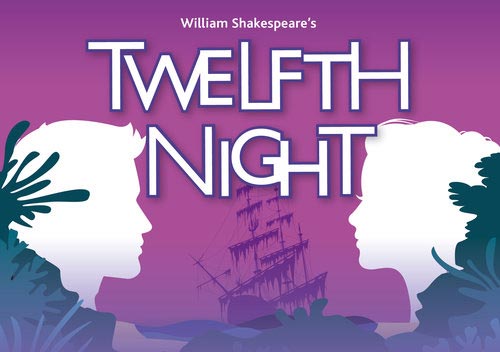

In William Shakespeare’s play “Twelfth Night”, Viola’s disguise plays an important role. Although a lady, Viola disguises herself as a gentleman to protect her youth and maidenhood in Illyria. This disguise helps her to get the job of a page at the court of the noble duke, Orsino. But when she visits Olivia as Cesario, with the duke’s message of love, a highly dramatic situation arises. The lady, Olivia, falls in love with her, sends a diamond ring to her, and later confesses her love openly. Her disguise brings trouble. Once, while she is leaving Olivia, a rejected suitor of Olivia challenges her to a duel. However, a stranger, Antonio, mistaking her for Sebastian, saves her. Antonio also brings the charge of ingratitude against her. Viola faces a terrible problem when Olivia claims Cesario to be her husband and the duke warns her not to come in his sight again. Once again, it is because of her disguise that she cannot express her love for the duke. Towards the end, when Sebastian comes face to face with Viola in the presence of all, her true identity gets revealed. Thus, Viola’s disguise is a dramatic device that creates complications and many interesting situations in ‘Twelfth Night’.
In this play, apart from creating comic complications, Viola’s disguise explores the themes of gender identity, love, and appearance versus reality. Viola crosses the conventional boundaries of gender and enjoys a freedom that would otherwise be difficult for a woman in Elizabethan society. Her disguise also creates dramatic irony, as the audience knows her true identity while the other characters remain unaware of it. The disguise produces a complex love triangle in which Viola loves Orsino, Orsino loves Olivia, and Olivia loves Cesario. Viola expresses her helplessness when she remarks, “Disguise, I see, thou art a wickedness” (Act II, Scene II). This reveals how her assumed identity becomes an obstacle to her own happiness. Shakespeare thus employs disguise not merely as a source of humour but also as a means of questioning traditional gender roles and exploring the complexities of human relationships.
Also read: Character of the Parson in Chaucer’s Canterbury Tales