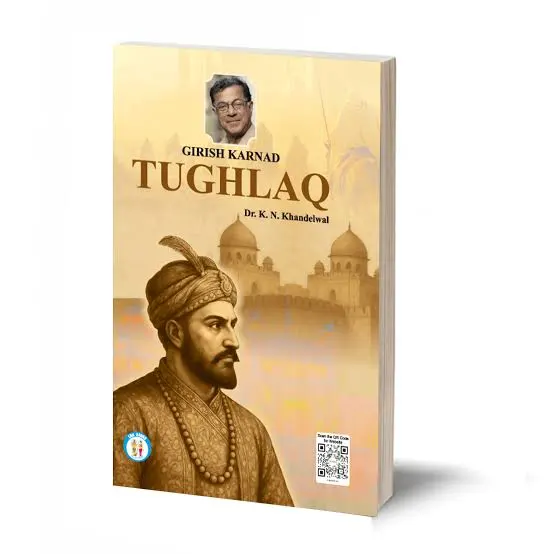

The Python symbol in scene eight of Girish Karnad’s Tughlaq indicates Tughlaq’s utter barbarity and inhumanity. The young sentry has seen a strange and frightening secret passage in Daulatabad fort. The old sentry says—”Yes it’s a long passage, a big passage, coiled like an enormous hollow python inside the belly of the fort.” They shall be far happier when that python breaks out and swallows everything in sight every man, woman, child, least.
The increased fierceness, brutality, and bloodthirstiness of the Sultan are also indicated by the python symbol. It also signifies the complete degeneration of his personality. From a human being, he has degenerated into a wild beast, a huge snake. Karnad’s use of symbols is the fine framework of his genius. It symbolizes the political situation of India of the sixties. The political mood of disillusionment that follows the Nehru era of idealism in the country is reflected here.
The python can also be interpreted as a symbol of fear and oppression spreading throughout the kingdom. Like a python that silently coils around its prey before devouring it, Tughlaq’s power gradually surrounds and suffocates his subjects. His idealistic political vision has been corrupted by suspicion, violence, and ruthless methods of governance. Through this image of the python, the play captures the atmosphere of insecurity created by the Sultan’s policies. The people are no longer protected by the ruler; instead, they feel threatened by the very authority that should safeguard them.
The python symbol reinforces the play’s central theme of the corruption of power and the failure of political idealism. Tughlaq initially presents himself as an intelligent, progressive, and visionary ruler, but his contradictory decisions and excessive reliance on violence gradually turn his idealism into tyranny. The secret passage coiled within the fort thus becomes an apt metaphor for the hidden darkness within Tughlaq himself. What appears externally as a magnificent fort of political power contains, within it, a dangerous and destructive force. Through this image, Karnad suggests that when power becomes detached from humanity and moral responsibility, it can transform the idealistic ruler into a figure of destruction.
Also read: William Blake’s London: Summary and Critical Analysis