
Introduction
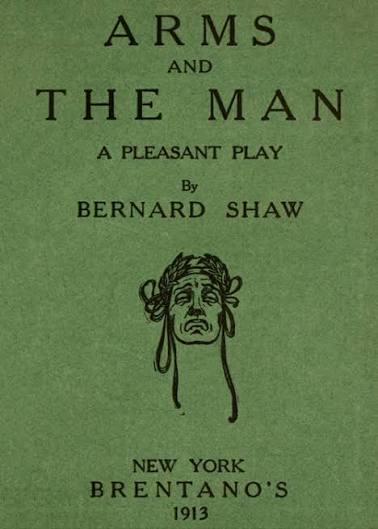
Sergius Saranoff is a Byronic hero in the drama ‘Arms and the Man‘. G.B.Shaw presents Sergius to expose the romantic idealism of war and love. But he is not merely an embodiment of a satiric idea. Sergius is described by Shaw as “a tall romantically handsome man with the physical hardihood, the high spirit, and the susceptible imagination of an untamed mountaineer chieftain”. He lives thoroughly in Pushkin and he formed a romantic world around him.
Romantic Ideals of Love and War
Sergius has a romantic illusion regarding love and war. To him, war is full of glory, and he goes to war like a true knight. On the battlefield, he led his army against the field guns. He won the battle because his enemies were supplied with the wrong ammunition. He is very much unreal and romantic in his notion of love. Sergius believes in higher love, which he possesses for Raina. She is his goddess, his queen, and his heroine. His love is based on illusion, and therefore it is easily shattered when he knows the truth. He finds higher love very much tíring and for refreshment, he indulges in a flirtation with Louka.
Sergius’s Vanity and Inner Contradictions
Sergius is a foolish and self-conceited man. He has no penetrating insight or proper understanding. He is incapable of thinking reasonably. Sergius is conceited and thinks highly of himself. Though he has committed the greatest blunder on the battlefield, he thinks that he has done a great deed of heroism. In Sergius, there is no concentration, no proper application. The result is that he is caught in the trap laid for him by Louka and becomes a mere puppet in her hands and ultimately marries her.
George Bernard Shaw uses Sergius to satirise the conventional romantic hero celebrated in nineteenth-century literature. Sergius appears brave, noble, and honourable, but beneath this attractive exterior lies vanity, inconsistency, and emotional instability. Shaw demonstrates that heroic appearances often conceal human weaknesses. Sergius’s dramatic victory on the battlefield is not the result of military genius, but of the enemy’s mistake, and in this way, the author exposes the illusion of heroic glory.
The conflict between his ideals and reality is evident through his character. He constantly attempts to live according to romantic ideals of honour, courage, and perfect love, yet real life refuses to conform to these ideals. His relationship with Raina is based on exaggerated admiration rather than genuine understanding, while his attraction to Louka reveals the instability of his emotions. Through this conflict, Shaw suggests that romantic ideals are often impractical and unsustainable in everyday life.
Sergius’s relationship with Louka marks a turning point in his character. Unlike Raina, who initially shares his romantic fantasies, Louka is practical, ambitious, and fearless. She refuses to accept her lower social status and openly challenges Sergius’s pretensions. Their relationship exposes the hypocrisy behind Sergius’s claims of honour and higher love. Ultimately, Louka’s confidence and realism overpower Sergius’s idealism, leading him to abandon his romantic illusions and accept a more realistic relationship.
Sergius is also capable of possessing some common sense, and he gradually becomes aware of the reality about which he was so long blinded. The experiences of war make him feel that there is no romance in soldiering. To him, war is the coward’s art of attacking mercilessly when one is strong and keeping out of harm’s way when one is weak. Sergius is a complex character, combining romanticism, idealism, self-importance, conceit, and occasional good sense. These conflicting qualities often lead him to behave inconsistently. He himself is conscious of this mixture of opposites in his nature and says:
“(speaking to himself) which of the six is the real man? That’s the question that torments me. One of them is a hero, another a buffoon, another a humbug, another perhaps a bit of a blackguard… And one at least is a coward, jealous like all cowards.”
Sergius as a Foil to Bluntschli
The contrast between Sergius and Captain Bluntschli is central to Shaw’s dramatic purpose. Sergius represents emotion, appearance, and romantic idealism, whereas Bluntschli represents practicality, intelligence, and common sense. Sergius values heroic gestures and grand speeches, while Bluntschli believes in efficiency, discipline, and survival. This sharp contrast enables Shaw to criticise false heroism and demonstrate that ordinary intelligence is often more valuable than theatrical bravery.
Although Sergius begins the play as an idealistic and self-important officer, he gradually develops greater self-awareness. His experiences force him to question his beliefs about war, love, and honour. By recognising the contradictions within himself, he moves closer to understanding reality. While he never completely abandons his romantic temperament, his growing awareness reflects Shaw’s belief that genuine maturity comes from confronting life honestly rather than clinging to comforting illusions.
Conclusion
In short, Sergius’s character has been conditioned by the anti-romantic intentions of the dramatist. Just as Captain Bluntschli typifies anti-romanticism, Sergius stands for romanticism. He serves to throw his anti-romanticism into sharp relief by comparison. In the beginning, he is at the centre of the action, but gradually he is pushed into the background. In the beginning, Sergius is at the centre of the action, but gradually he is pushed into the background. Through his character, Shaw satirises romantic heroism and shows that genuine courage lies in realism, honesty, and practical wisdom rather than empty ideals.
Also read: Short Questions and Answers from “Arms and the Man” by G.B.Shaw