
Introduction
The Peasants’ Revolt of 1381 was one of the most significant popular uprisings in medieval English history. It was the first large-scale rebellion by ordinary people against oppressive taxation, feudal obligations, and social inequality. Although the revolt was ultimately suppressed, it exposed the growing dissatisfaction of peasants and labourers with the existing social and economic system. The uprising marked an important turning point in the decline of feudalism and influenced the relationship between rulers and the common people in England.
Background of the Revolt
The fourteenth century was a period of great hardship in England. The country suffered from recurring wars, economic instability, famine, and the devastating effects of the Black Death (1348–1350), which killed nearly one-third of the population. The dramatic population decline created a severe shortage of labour. As a result, surviving workers demanded higher wages and better working conditions.
But, landowners and the government resisted these demands. Parliament passed laws to keep wages at pre-plague levels and restricted the movement of labourers. These measures created widespread resentment among peasants and agricultural workers.
Causes of the Peasants’ Revolt
A serious consequence of the Black Death was the Peasants’ Revolt of 1381. Because of the dreadful mortality caused by the plague, there was a severe shortage of labourers and a rise in wages. This situation proved inconvenient for landowners, who were unwilling to pay higher wages despite the scarcity of workers. At the same time, they could not allow their lands to remain uncultivated. Consequently, they used their influence in Parliament to pass laws in their favour, particularly the Statute of Labourers (1351), which fixed wages at earlier levels and restricted workers from seeking better employment.
These measures were considered unjust by the peasants. Since the prices of essential goods continued to rise, they argued that there was no justification for reducing or freezing wages. Discontent spread rapidly among the rural population, creating the conditions for a widespread uprising.
Another immediate cause of the revolt was the repeated imposition of the poll tax by the government to finance the expensive war with France. The tax was levied equally on rich and poor, placing a heavy burden on ordinary people. The harsh methods used by tax collectors further intensified public anger and transformed dissatisfaction into open rebellion.
Leadership of the Revolt
The revolt was inspired and led by several influential figures, including John Ball, Wat Tyler, and Jack Straw. John Ball, a radical preacher, encouraged the idea that all people were equal before God and criticised the privileges enjoyed by the nobility and the clergy. Wat Tyler emerged as the principal military leader of the rebels, organising large groups of peasants and directing their march toward London.
Their leadership united thousands of peasants, craftsmen, and labourers who demanded the abolition of serfdom, fair wages, lower taxes, and greater social justice.
Major Events of the Revolt
The Peasants’ Revolt began in Essex and Kent in 1381 before spreading rapidly to other parts of southeastern England. Thousands of rebels marched to London, where they destroyed legal records, attacked symbols of feudal authority, and demanded justice from the young King Richard II.
Violent incidents accompanied the uprising. Manor houses and government buildings were burned, and the magnificent palace of John of Gaunt was destroyed. The rebels entered the Tower of London and executed important royal officials, including the Archbishop of Canterbury, Simon Sudbury, and the Lord Treasurer.
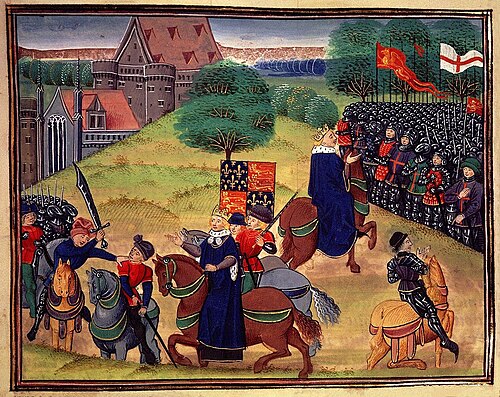
King Richard II initially agreed to negotiate with the rebels and appeared willing to consider their demands. However, during a meeting at Smithfield, Wat Tyler was killed by the Lord Mayor of London. Following Tyler’s death, the royal government regained control, and the rebellion was suppressed with considerable force.
Suppression of the Revolt
The situation became increasingly dangerous, requiring decisive action from the government. King Richard II acted quickly to restore order. Royal forces dispersed the rebels, and many of the leaders were captured and executed. The promises made to the peasants during the negotiations were withdrawn, and the revolt officially came to an end.
Although the uprising failed in its immediate objectives, it revealed the growing power of ordinary people and demonstrated that the feudal order could no longer remain unquestioned.
Significance of the Peasants’ Revolt
The Peasants’ Revolt had far-reaching historical significance despite its failure. It showed that the lower classes were no longer willing to accept injustice without resistance. The rebellion weakened the foundations of feudalism and encouraged gradual social and economic reforms in England.
One important lesson for rulers was that excessive taxation and unfair laws could provoke widespread unrest. The revolt also emphasised the importance of dialogue and justice in maintaining political stability. Although serfdom was not abolished immediately, the system continued to decline in the following decades as more peasants purchased their freedom and became independent farmers.
Consequences of the Revolt
The immediate political consequences of the revolt were limited because the government suppressed the rebellion and executed many of its leaders. Nevertheless, some lasting changes followed:
- The unpopular poll tax was abandoned.
- The strict enforcement of wage-control laws gradually declined.
- The institution of serfdom continued to weaken.
- Increasing numbers of peasants gained personal freedom and became tenant or independent farmers.
- The revolt encouraged later demands for social equality and political reform.
Conclusion
The Peasants’ Revolt of 1381 was a landmark event in English history. It arose from economic hardship, oppressive taxation, unfair labour laws, and widespread social inequality after the Black Death. Although the rebellion was crushed, it exposed the weaknesses of the feudal system and accelerated its gradual decline. More importantly, it demonstrated that ordinary people could challenge injustice and demand fair treatment. The revolt remains an important symbol of resistance against oppression and a significant step in the long process toward greater social and economic freedom in England.
Also read; The Oedipus Complex in D.H. Lawrence’s Sons and Lovers: A Psychoanalytic Analysis