
Introduction
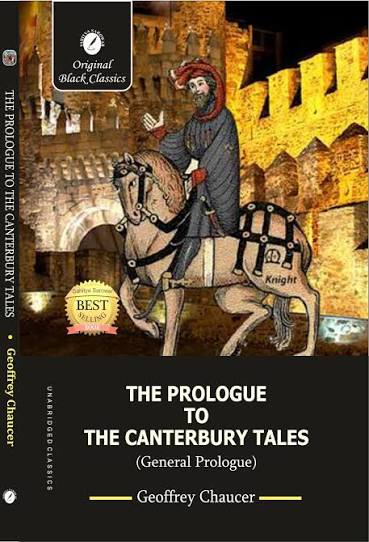
Geoffrey Chaucer was deeply fascinated by human life, and this fascination is vividly reflected in The Prologue to the Canterbury Tales. He observes the people around him with remarkable curiosity and presents them with extraordinary realism. Although the idea of a pilgrimage as a literary framework was not entirely original, Chaucer’s method of characterization is uniquely his own. Every pilgrim is introduced with such vivid detail that readers can easily imagine them walking before their eyes. His characters resemble living portraits rather than fictional creations. Thus, we encounter the typical Knight of medieval England in his battle-worn attire, arriving directly from military service to join the pilgrimage.
One of Chaucer’s greatest achievements is his ability to combine realistic observation with subtle humour. He neither openly praises nor directly condemns his characters. Instead, he allows their actions, appearance, and speech to reveal their true personalities. This balanced method makes The Prologue one of the earliest masterpieces of realistic characterization in English literature.
Medieval Society and the Importance of the Church
A complete society consists of people belonging to different social classes. In fourteenth-century England, the Feudal, Urban, and Ecclesiastical groups formed the three major sections of society. Among these, the Church exercised enormous influence over both religious and social life. Priests, monks, friars, and other church officials enjoyed considerable authority because they were regarded as spiritual guides.
Since Chaucer was a keen observer of his age and selected a pilgrimage as the setting of his work, it was natural for him to include representatives of the Church among his pilgrims. Through these ecclesiastical characters, he offers a revealing picture of the strengths as well as the weaknesses of the medieval religious institution.
The Ecclesiastical Characters in The Prologue
As we go through The Prologue, we find that seven pilgrims are directly connected with the Church. Some have taken religious vows, while others earn their livelihood through ecclesiastical offices. Chaucer carefully selects these figures because ordinary people frequently interacted with them in daily life.
These seven representatives include the Prioress, the Monk, the Friar, the Clerk of Oxford, the Parson, the Summoner, and the Pardoner. Together, they represent different levels of the medieval Church, ranging from respected spiritual leaders to corrupt officials.
The Prioress: Appearance over Spirituality
The Prioress heads the list of the religious pilgrims. She bears the romantic name Madame Eglantyne and appears gentle, affectionate, and refined. She speaks French, displays elegant table manners, and constantly imitates aristocratic behaviour. These qualities make her an attractive and charming personality.
However, Chaucer’s portrayal is deeply ironic. Although she has taken vows of poverty, chastity, and charity, she remains excessively concerned with elegant clothing, jewellery, and personal appearance. The humorous contradiction reaches its height when Chaucer describes her weeping over a trapped mouse while feeding her little dogs roasted meat. Such details reveal that she misunderstands the true spirit of religious devotion. Instead of spiritual discipline, she values worldly refinement and sentimental display.
The Monk: A Worldly Religious Leader
The contrast between religious ideals and actual behaviour becomes even more pronounced in the character of the Monk. He is energetic, fond of hunting, and enjoys a luxurious lifestyle. He openly rejects the strict monastic rules established by St. Benedict and St. Maure. Rather than remaining inside the monastery for prayer and study, he prefers outdoor sports, expensive clothing, and comfortable living.
Chaucer uses the Monk to criticize those members of the clergy who accepted the privileges of monastic life without accepting its responsibilities. His character reflects the growing worldliness that had entered many religious institutions during the late Middle Ages.
The Friar: Religion as a Means of Profit
The Friar is cheerful, sociable, and highly skilled in conversation. He possesses exclusive rights to collect alms in a particular district and excels in persuading wealthy people to donate money. He is familiar with rich merchants, prosperous women, and tavern keepers but avoids contact with the sick and the poor, whom he is supposed to serve.
Unlike St. Francis, the founder of the Franciscan Order, Chaucer’s Friar values money more than genuine charity. He encourages sinners to make financial contributions rather than sincerely repent. Through this character, Chaucer exposes how religious authority could be exploited for personal financial gain.
The Summoner and the Pardoner: Corruption within the Church
The Summoner and the Pardoner occupy relatively minor positions in the Church, yet they symbolize some of its deepest moral failures.
The Summoner is responsible for summoning offenders to appear before ecclesiastical courts. Instead of performing his duty honestly, he accepts bribes and assures people that they need not fear punishment if they pay him sufficiently. His unhealthy appearance, love of wine, and immoral private life further emphasize his corrupt nature.
The Pardoner is equally dishonest. He travels from place to place selling fake relics and offering pardons in exchange for money. His persuasive preaching serves not spiritual purposes but personal enrichment. Chaucer presents him as a master of deception who manipulates religious faith for financial profit. Together, the Summoner and the Pardoner illustrate how greed had corrupted certain officials within the medieval Church.
The Clerk of Oxford: The Ideal Scholar
In sharp contrast to these corrupt churchmen stands the Clerk of Oxford. He represents the ideal medieval student who values knowledge above wealth. Although poor, he gladly spends whatever money he receives on books rather than material comforts. His threadbare clothing reflects his poverty, but his devotion to learning demonstrates his intellectual richness.
The Clerk speaks only when necessary, and his words are thoughtful and wise. His humility, sincerity, and love of education make him one of the most admirable figures among the pilgrims.
The Parson: The Model Religious Leader
The Parson represents Chaucer’s ideal clergyman. He faithfully practises what he preaches and serves his parishioners with complete devotion. Unlike many other members of the clergy, he refuses to exploit religion for financial benefit. Even when people fail to pay their tithes, he does not punish or abandon them.
Despite the large size of his parish, he personally visits his people whenever necessary. He considers himself a shepherd responsible for the welfare of his flock. His humility, compassion, and dedication embody the true ideals of Christian ministry. Through the Parson, Chaucer demonstrates that genuine holiness still existed despite widespread corruption within the Church.
Chaucer’s Use of Irony and Satire
One of the most remarkable features of Chaucer’s portrayal of ecclesiastical characters is his masterful use of irony and gentle satire. Rather than directly attacking the Church, he allows readers to recognise the contradictions between appearance and reality. The Prioress appears compassionate but lacks true charity. The Monk wears the robe of a religious man but loves worldly pleasures. The Friar preaches repentance while seeking wealth, and the Pardoner sells spiritual salvation for personal profit.
This indirect method of criticism makes Chaucer’s satire both humorous and effective. His objective style allows readers to judge the characters for themselves instead of being instructed by the author.
Realism in Characterisation
Chaucer’s ecclesiastical figures are not merely symbols of virtue or vice. They are fully developed human beings with distinct personalities, habits, strengths, and weaknesses. Their clothing, speech, physical appearance, occupations, and behaviour all contribute to their individuality.
Such realistic characterisation marks a significant departure from the idealised figures commonly found in medieval literature. Chaucer presents people as they actually are rather than as moral abstractions. This realism explains why The Canterbury Tales continues to remain relevant centuries after its composition.
Chaucer’s Criticism of the Medieval Church
Although Chaucer exposes corruption among many religious figures, his criticism is directed at individuals rather than Christianity itself. He distinguishes between those who misuse religion for personal benefit and those who sincerely uphold its ideals. The inclusion of exemplary figures like the Clerk and the Parson prevents the work from becoming an attack on the Church as a whole.
Instead, Chaucer calls for moral reform by revealing how far certain church officials had departed from their sacred responsibilities. His balanced approach demonstrates both his fairness as an observer and his respect for genuine religious values.
Conclusion
Through his portrayal of the ecclesiastical characters in The Prologue to the Canterbury Tales, Chaucer presents a vivid and realistic picture of the medieval Church. His pilgrims represent both the corruption and the genuine spirituality that coexisted within the religious institution of fourteenth-century England. The vain Prioress, the worldly Monk, the profit-seeking Friar, the dishonest Summoner, and the fraudulent Pardoner expose the moral decline that had entered the Church, while the learned Clerk and the devoted Parson preserve its highest ideals.
By combining realism, irony, humour, and psychological insight, Chaucer creates unforgettable portraits that transcend their historical period. His ecclesiastical characters remain enduring examples of human nature, reminding readers that true religious devotion depends not upon outward appearance or official position but upon honesty, humility, and sincere moral commitment.
You may also like Restoration Comedy: Definition, Features, Themes, and Examples