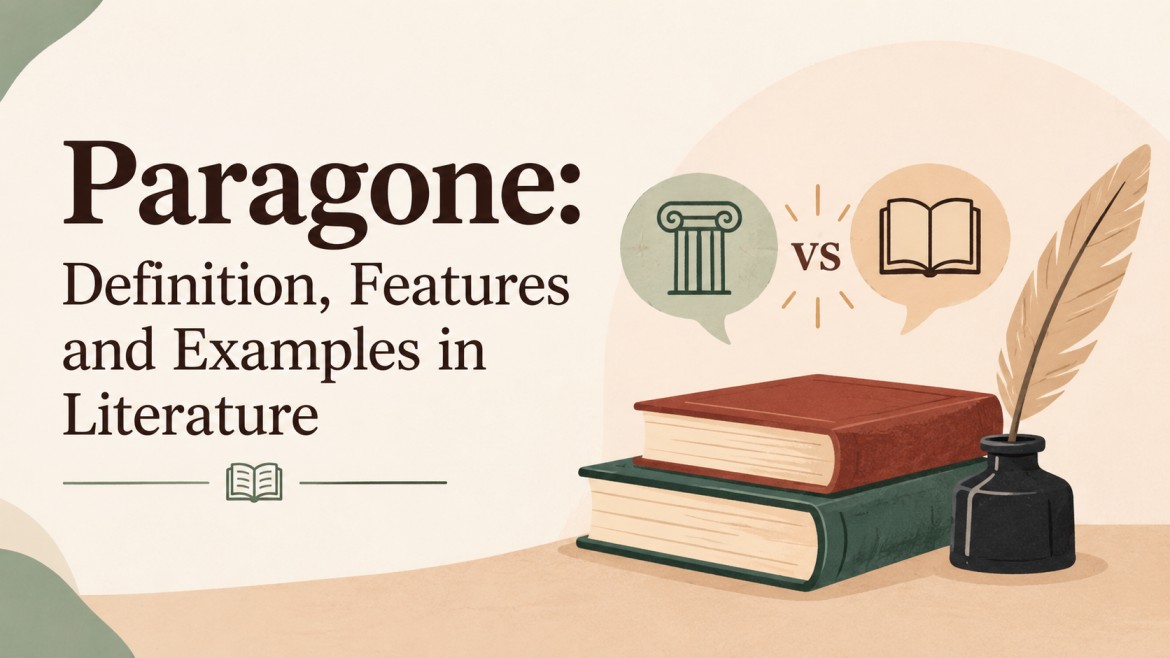

Paragone is an Italian word that means ‘comparison’. It is a contention between the arts, usually spoken by representative practitioners, to determine supremacy.
The most typical paragone pits poetry and painting against each other, with the ultimate conclusion that each has an indisputable excellence and supremacy which informs the excellence and supremacy of the other (hence the famous dictum attributed to Simonides: ‘the poem is a speaking picture, the painting mute poetry’. Timon of Athens opens with a paragone between painter and poet; the anonymous entertainment for Queen Elizabeth at Mitcham (1598) features a poet, a painter, and a musician.
The concept of paragone became significant during the Renaissance, when artists and intellectuals were deeply interested in comparing different forms of artistic expression. The debate was not simply about which art was superior; it was also about the distinctive abilities and limitations of each medium. Painting, for instance, was often praised for its ability to represent the visible world immediately, whereas poetry was valued for its capacity to describe actions, emotions, ideas, and events unfolding through time. Such comparisons encouraged artists and writers to think about the nature, purpose, and expressive power of their respective arts.
In literary criticism, paragone can therefore be understood as a productive debate between artistic forms rather than merely a competition for supremacy. The tradition has remained influential beyond the Renaissance and can be applied to discussions of literature, painting, sculpture, music, theatre, and other forms of representation. In this sense, paragone provides an important framework for understanding the relationship between different arts and the ways in which they compete, complement, and illuminate one another.
Philip Sidney’s Defence of Poetry (c. 1579) plays with the convention in asserting the power of poetry over that of personified figures of the historian and the philosopher. Examples of the paragone are Lodovico Dolce, Aretino (1557); Leonardo da Vinci, Trattato della Pittura (c. 1500). Ben Jonson’s The Masque of Queens and other court entertainments discussed the interaction of poetry, music, painting, costume, and stage spectacle, inviting comparison among different artistic forms. Shakespeare’s The Winter’s Tale, particularly the famous statue scene involving Hermione, also raises questions about the relationship between painting, sculpture, theatrical illusion, and living representation.