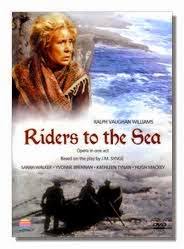

‘Riders to the Sea’ literally means people venturing out into the sea. In this play, Riders to the Sea by J.M.Synge, the life of the Aran Islanders is represented through one family. The death of all its male members shows how the sea acts as an agent of fate. The sea sustains these people; it also swallows all the earning members of the Maurya family. But Synge suggests the cruelty of the sea and human helplessness before its omnipotent power.
The title “Riders to the Sea” is the most significant and symbolic to the thematic journey. The main theme of the play, Riders to the Sea, is the conflict between man and the sea. The title is very attractive and thought-provoking. The readers are curious to know who the riders are. They will go deep into the sea with the riders. Then the mystery will be revealed, and the readers will shed tears. The two riders, Bartley and Michael, represent the whole riders of the peasant families of the Aran Islanders.
In the play, two riders are riding on the grey pony, and Bartley is riding on the red mare. They ride on their horses to the sea. Through the riding of Michael and Bartley, we see the Aran islanders. Happiness and enjoyment bid them farewell. Sorrows and sufferings are the part and parcel of their riding. They have to fight constantly against the stony soil from which they will produce food grains after the hard toil and sweat of their body. And the hungry sea is ready to devour the riders. Firstly, she tempts with the bait of their source of living, and lastly, she snatches away every fisherfolk of the islanders.
The title helps us to go deep into the text and the sea. The story is about the tragic fate of Maurya, an old woman of the island. She has her father-in-law, her husband, and six sturdy sons. They are all riders to the sea. But all of them except Bartley were devoured before the curtain rises. The play is about the last rider, Bartley. Maurya’s fifth son, Michael, drowned in the sea nine days before the play begins. Bartley wants to go to the sea. Maurya dissuades, but Bartley says to Cathleen, “It’s a life of a Youngman to be going to the sea.” The sea devours him also.
The very phrase “Riders to the Sea” creates a sense of movement toward danger and death. The word “to” is significant because it suggests a journey into the unknown from which there may be no return. The audience gradually realizes that the riders are not merely travelling on the sea for a livelihood but are unknowingly moving toward their doom.
The title has a biblical significance. If we have a look at the Book of Exodus in the Old Testament, we will realize the symbolic meaning. When the horses of Pharaoh with his chariots and his horsemen went into the sea, the Lord brought back the waters of the sea upon, but the people of Israel walked on dry ground in the midst of the sea. Then Miriam, the prophetess, the sister of Aaron, took a tumbrel in her hand, and all the women went out after her with timbrels and dancing. Miriam songs-
“Sing to the Lord, for he has
Triumphed gloriously;
The horse and his rider he had
Thrown into the sea.”
Pharao’s riders are destined to die as Maurya’s ‘riders’ are fated to meet their death in the sea.
The title also has a supernatural element. One of the riders is the ghost of Michael, who pursues his living brother and takes him from this world. To quote T.R. Henn-
“It (the sea) is the killer of the young, the breadwinners, whose life is to be upon it. The fishermen are all its riders, mysteriously linked to the human and super-human riders, here and in tradition.”
The title also emphasizes the mythic and supernatural elements. It indicates the manner in which the final tragedy overtakes Maurya. The sea has devoured all the males of Maurya’s family. All are the riders to the sea. The lives of the Aran islanders are determined by the sea. Their fates are destined by the hungry sea, whereas Pharash’s horsemen were punished by their misdeeds. Synge with his tragic scheme pushes the riders into the sea. So all the riders have taken shelter under the sea after their death. Hence, the title is very suggestive and symbolic.