
Introduction:
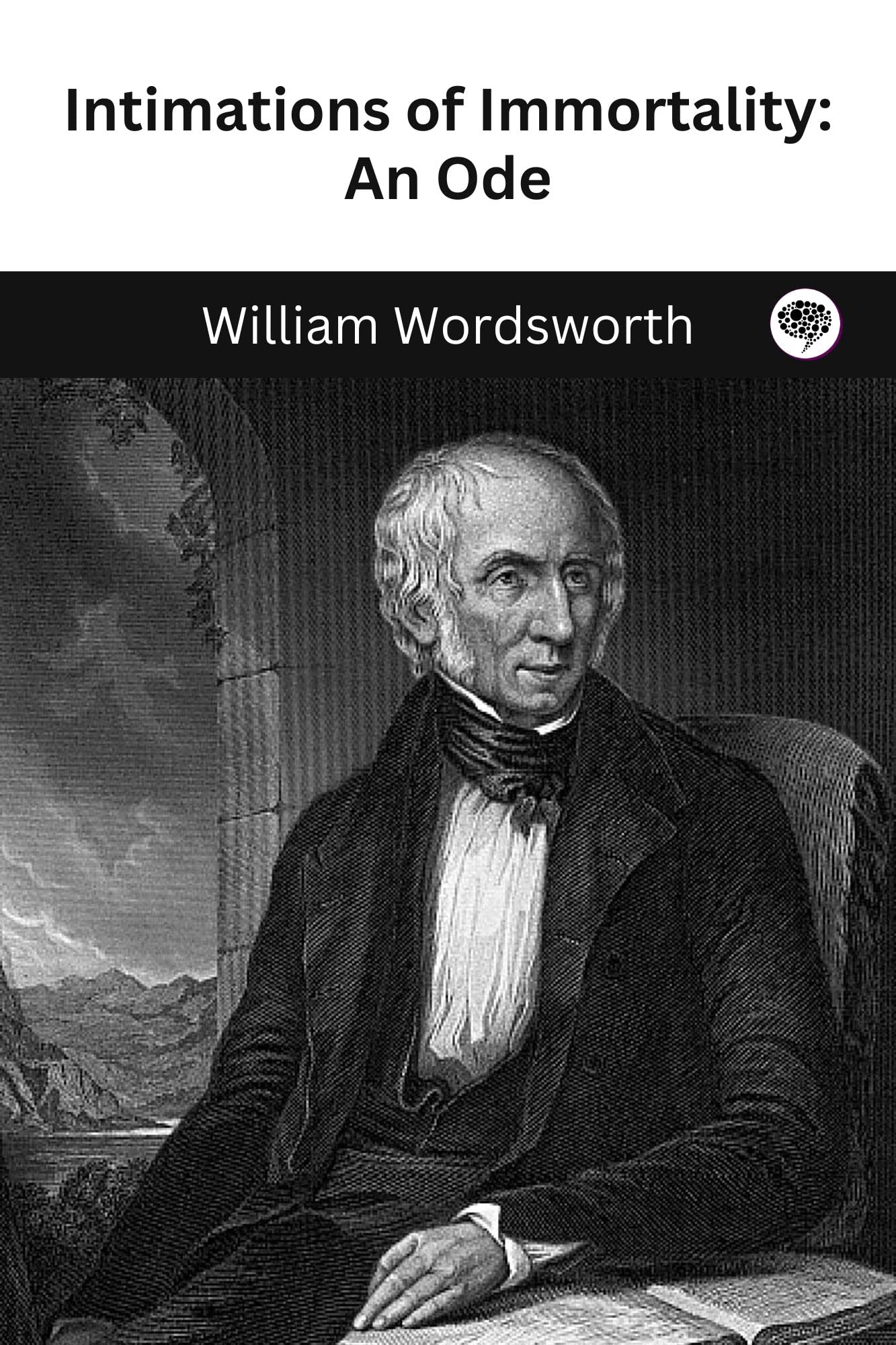
Ode on Intimations of Immortality is one of the greatest poems of William Wordsworth. It is claimed as “Wordsworth’s single but supreme triumph in the highest kind of lyrical architecture”. In its theme as well as technique, in its mood as well as moral, this ode is a classic of Wordsworthian poetry and remains an outstanding poem of a great age of poetry.
Platonic Philosophy and Pre-existence of Soul
The poem certainly owes much to the Platonic philosophy for its doctrine of the pre-existence of the soul. It bears a close analogy to Plato’s teaching about the immortality of the soul. Wordsworth traces here the course of the soul from heaven to earth and the hearing of heavenly visions on the earthly existence.
Wordsworth’s chief argument in the poem, however, is not the doctrine of the pre-existence of the human soul. The idea of pre-existence is, of course, emphasized in the title. Yet, it is only a secondary element in the poem. Wordsworth’s primary thought in the poem is about childhood and its higher endowments. The entire speculation about the previous existence of the soul is based on the poet’s faith in the blessed experience of childhood. The central theme of the poem is noted in the poet’s idealization of childhood.
Of course, there are many to disagree with the poet’s idealization of childhood. It has been asserted that Wordsworth has an over-idealized childhood. In what sense is a child a great philosopher? Is it not too much to call him ‘a mighty prophet! Seer blest’? In what sense does he read the ‘eternal deep’? These are the deep questions, which have been raised by many, including Coleridge, and definitely remain engrossingly controversial.
Sense of Loss and Recovery:
One of the most remarkable aspects of this Ode is Wordsworth’s profound sense of loss and recovery. The poem begins with a mood of sorrow as the poet laments the fading of the celestial glory that once illuminated his perception of Nature. The famous lines:
There was a time when meadow, grove, and stream,
The earth, and every common sight,
To me did seem
Apparelled in celestial light…
beautifully expresses the poet’s recollection of childhood vision when Nature appeared divine and magical. The phrase “celestial light” suggests a heavenly radiance that the poet can no longer fully experience in adulthood. This sense of loss gives the poem its emotional depth and universality, for it reflects the common human experience of losing the wonder and innocence of childhood.
Spiritual Optimism in the Ode
At the same time, the poem is not wholly pessimistic. Though the visionary gleam fades with age, Wordsworth discovers compensation in human memory, maturity, and philosophical reflection. This hopeful note is expressed in the celebrated lines:
Though nothing can bring back the hour
Of splendour in the grass, of glory in the flower;
We will grieve not, rather find
Strength in what remains behind.
The poet accepts the inevitable changes brought by time, yet he finds comfort in memory, experience, and the enduring power of Nature. The poem thus moves from despair to consolation and ultimately affirms the continuity of spiritual life.
Spiritual Autobiography and Emotional Intensity
The greatness of the Ode, however, does not rest solely on Wordsworth’s philosophization of the blessedness of childhood. The permanent value of the Ode lies, too, in the poet’s spiritual conviction, imaginative excellence, emotional intensity and poetic sense. The poem is a piece of spiritual autobiography. Wordsworth has succeeded wonderfully here in convincing others his own spiritual conviction. He has presented his own emotional realization with unequalled power and succeeded in bringing the individual feeling to the universal experience.
Another important feature of the Ode is its autobiographical element. The poem reflects Wordsworth’s own spiritual crisis and recovery. Like many Romantic poets, Wordsworth regarded poetry as “emotion recollected in tranquility,” and in this Ode he transforms his personal feelings into a universal meditation on life, childhood, and immortality. His reflections on childhood are deeply connected with the Romantic belief that children possess a special closeness to Nature and truth. The child, according to Wordsworth, retains memories of a divine existence that adults gradually forget under the pressures of worldly life.
Nature and Man:
The chief glamour of the Ode is, however, felt in its treatment of Nature and Man. In this respect, the Ode is a characteristic work of Wordsworth. Wordsworth’s deeper insight into external Nature, his love for the simple and innocent aspect of human life and his vision about the relation between Man and Nature, as one in a permanent tie, are all present here.
Nature Imagery and Mysticism
The imagery of the poem is equally rich and symbolic. Nature is presented not merely as physical scenery but as a living spiritual presence. Birds, flowers, rainbows, and fields become symbols of eternal beauty and divine harmony. Wordsworth’s use of natural imagery creates a deeply meditative atmosphere and strengthens the mystical quality of the poem. The poet’s intimate relationship with Nature is evident when he writes:
To me the meanest flower that blows can give
Thoughts that do often lie too deep for tears.
These concluding lines reveal Wordsworth’s mature philosophy. Even the simplest object in Nature can awaken profound spiritual insight. The depth of feeling conveyed here is one of the reasons why the Ode continues to be regarded as one of the finest achievements of Romantic poetry.
Form and Diction:
The poem is an ode. It is an irregular and complex ode. The stanzas of the poem vary in the number as well as metre of the lines. There is also the utmost variety in the length of different lines and in the order of rhymes. The poet has achieved admirably here a sustaining effect of his music. He has also varied his metre in accordance with the changes of his thoughts and feelings.
The diction of the poem is also highly admirable. It illustrates an ideal style of dignified simplicity. At the same time, it attains the rare poetic grandeur, which is never lost in pomposity or artificiality. His diction is evocative yet simple, and his verification, subtle yet sonorous, as heard in such lines as the following ones :
But it will not be long
Ere this be thrown aside,
And with new joy and pride
The little Actor cons another part;
Filling from time to time his ‘humorous stage’
With all the persons, down to palsied Age,
That life brings with her in her equipage;
As if his whole vocation
Were endless imitation.
Thus, Ode: Intimations of Immortality remains one of the greatest achievements of Romantic poetry for its philosophical depth, spiritual insight, emotional intensity, and exquisite poetic craftsmanship. The poem continues to inspire readers with its deep meditation on childhood, memory, Nature, and immortality.
Also read Important Multiple Choice Questions from The Thought Fox by Ted Hughes