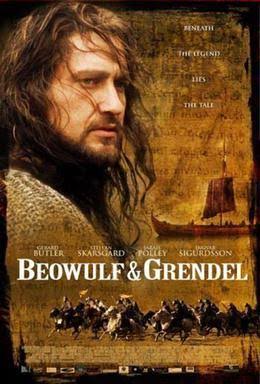

Beowulf is a heroic poem and is looked upon as one of the earliest specimens of epic poetry. The hero of the poem is presented as an epic hero, and the poem, consisting of 3183 lines, records, in two parts, the three great feats of the hero, Beowulf. Beowulf, an earliest Teutonic epic, belongs to the primitive world. The poem mingles primitive myth with heroic story and celebrates the heroic grandeur of a mighty personality, both as a social document and as an epic narrative. The poem is related to the heroic aspect of the primitive character, and Beowulf stands as the model of the Teutonic hero.
The first part of the poem deals with the hero’s fight with the beast-man Grendel and with his dame, and the other part treats his fight with a fierce fire-breathing dragon. The first part, again, has two divisions-Grendel’s death and his mother’s death at the hands of Beowulf. The second part presents the incident that happens some fifty years later and celebrates Beowulf’s noble triumph and heroic death in the course of his fight with the dreadful dragon. The two main stories of Beowulf are rather separate and only loosely joined by the heroic figure of Beowulf. Both stories celebrate Beowulf’s heroic virtues and his selfless readiness to stand for others.
In the first part, Beowulf comes as a rescuer of Hrothgar, the king of the Danes. The great hall, Heorot, built by Hrothgar, is ravaged by Grendel. The monster has slain all who ventured to stay in the hall at night. Beowulf’s heroic heart is thrilled and his chivalrous spirit roused, as he hears the state of affairs at Heorot, his friend’s great hall. He resolves to set Heorot free from the monster and with the help of some valiant Geats, crosses the sea and reaches Heorot. Beowulf swears boldly that he will slay Grendel. When the night comes, only Beowulf and his men are left in the hall to meet the formidable adversary. All these details definitely indicate two aspects in Beowulf’s character-his adventurous spirit and his undaunted courage. He is ready for any eventuality and fears no foe to establish his promise and to protect the weak against the wicked. Beowulf’s strength and gallantry come out in his struggle with Grendel. As Grendel enters the hall, with his enormous strength, Beowulf readily challenges him. Although Grendel possesses the giant’s strength, Beowulf tears away his arms, and the fiend flees to the sea-cave only to die. Beowulf’s heroic strength is, thus, clearly established, and the poem serves to emphasize this. In this portion, Beowulf represents fully the heroic spirit of a remote Heroic Age that valued gallantry and might above all other things.
Beowulf’s heroism comes to the limelight further, as the vengeance of Grendel’s dame begins. She comes to take revenge of her son’s death, rushes to Heorot and kills one of Hrothgar’s dearest friends, and bears away his dead body to her cave. When Beowulf is informed of this, he resolves to take vengeance. He tells his friend with a heroic urge, “Better vengeance for a friend than too much of sorrow for him. Who can win honour let him do it before he dies for that is best for him when he is dead.” This is truly the resolution of an inspired epic hero. And Beowulf is an ideal Teutonic epic hero. Beowulf is determined that Grendel’s kin can never escape from him. He goes to her cave triumphs over her, and returns victoriously on the bloody sea bearing Grendel’s head. Beowulf, thus, becomes an epic hero in strength and performance, overpowering the dreadful foes with superb prowess.
Beowulf’s heroism is, however, struck more prominently in the last part of the epic in his encounter with the dragon. Enraged by the ravage of his treasures by some Geats, that fierce, fire-breathing dragon begins to ransack Beowulf’s people and kingdom. The king is old, but valorous still, and comes out to save his people from that terrible fiend. He has a gallant fight with the dragon, overpowers the foe, but himself receives a fatal blow and dies heroically. His death serves to show his greatness and establishes the heroic spirit of which he is made. Here, again, Beowulf, in his heroic death, idealises the truly chivalrous and heroic spirit of an age of heroism.
Yet, the Teutonic hero in Beowulf is not merely a pagan hero and leader, a non-Christian prince of vigour and spirit. He is found to bear in plenty a good deal of Christian idealism. In his spirit of chivalry, dedication and self-sacrifice, this pagan sovereign attains the blessed virtue of Christianity.
Beowulf possesses all the major qualities traditionally associated with an epic hero. He is of noble birth, performs extraordinary deeds, undertakes dangerous journeys, and fights supernatural enemies for the welfare of society. His victories over Grendel, Grendel’s mother, and the dragon symbolize the triumph of courage and moral responsibility over destructive evil. At the same time, his final battle reveals the tragic dimension of heroism: true greatness lies not merely in victory but in the willingness to sacrifice one’s life for one’s people. Thus, Beowulf is both a heroic warrior and a tragic ruler whose death marks the end of an age of heroic ideals.
Also read: Significance of Willing Suspension of Disbelief in The Rime of the Ancient Mariner