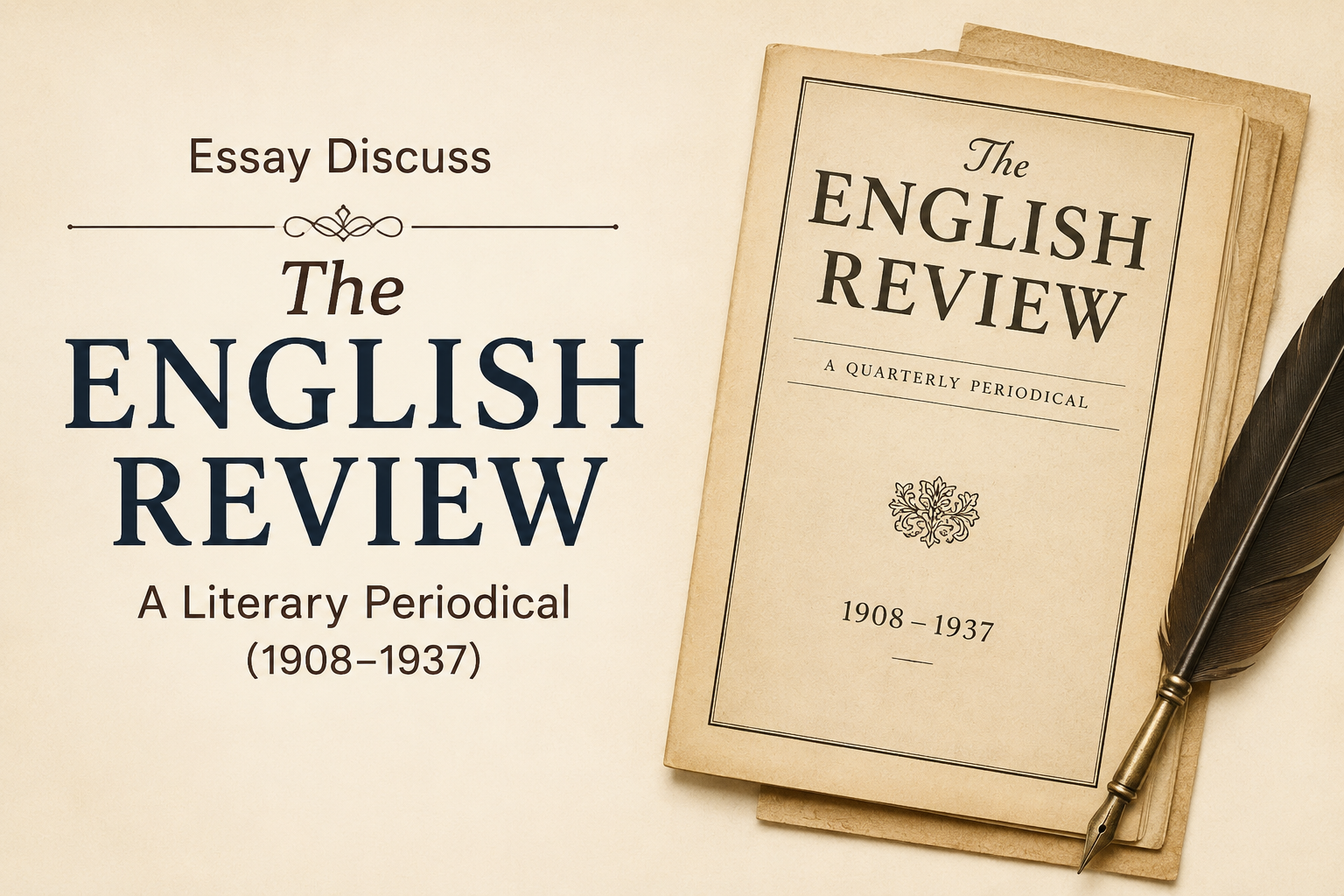

The English Review was an influential English-language literary periodical published from 1908 to 1937. It was founded in 1908 by Ford Madox Ford (then known as Ford Hermann Hueffer) with the aim of “giving imaginative literature a chance in England.” At a time when many magazines preferred established Victorian styles, The English Review sought to promote fresh literary talent and experimental writing.
Its first issue was remarkable for bringing together distinguished writers such as Thomas Hardy, Arnold Bennett, Henry James, Joseph Conrad, John Galsworthy, W. H. Hudson, R. B. Cunninghame Graham, and H. G. Wells. The journal was initially financed by Arthur Marwood, a wealthy Yorkshire landowner and friend of Ford, whose personality later inspired several characteristics of Christopher Tietjens, the protagonist of Ford’s Parade’s End. Ford’s period as editor, from December 1908 to February 1910, is regarded as the magazine’s most distinguished phase because of its high literary standards and its encouragement of innovative writing.
One of the greatest achievements of The English Review was its willingness to publish both established and emerging writers. It provided an important platform for many young authors who later became major literary figures. In addition to British writers, the magazine introduced English readers to the works of several notable international authors. Its pages featured the writings of Sherwood Anderson, Anton Chekhov, Hermann Hesse, Aldous Huxley, Katherine Mansfield, Bertrand Russell, George Bernard Shaw, Ivan Turgenev, and W. B. Yeats, reflecting its broad literary outlook and international character.
The periodical played a significant role in encouraging Modernist literature by promoting originality, psychological realism, and new narrative techniques. It became an important meeting ground for different literary movements and helped bridge the gap between nineteenth-century realism and the emerging experimental literature of the twentieth century.
When Ford Madox Ford was replaced by Austin Harrison, who edited the magazine until 1923, the journal continued to publish important literary works under subsequent editors; it gradually lost the unique influence it had enjoyed during Ford’s tenure. Finally, in 1937, The English Review merged with the National Review, bringing an end to one of the most significant literary magazines of the early twentieth century. Today, The English Review is remembered as one of the most influential literary periodicals in English literary history.
Read also: Rhyme Royal: Definition, Form, Characteristics and Examples