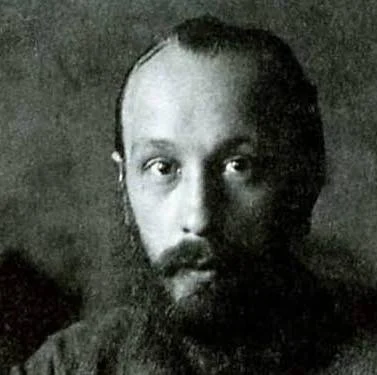

Chronotope literally means ‘time-place’. It denotes the intrinsic interconnection of these two dimensions, but also connotes an author’s specific attitude to the passing of time and the location of events in a narrative. The chronotope, according to its inventor, Russian linguist and literary critic Mikhail Bakhtin, is a formally constitutive category of literature, which means that it is a feature of every piece of literature. In other words, literature cannot have a chronotopic dimension, but this dimension may vary quite considerably from example to example. Variations in the formation of chronotopes can be used to specify genre, Bakhtin suggests. His extensive historical account of the development of different types of chronotope in The Dialogic Imagination (1981) offers a vivid illustration of the importance of this concept. As he shows, in classical Greek narratives, the hero often spends years away from home, having adventure after adventure, all without ever ageing, and when he returns home, his youthful bride is still as youthful as she ever was. The departure from the constrictions of biological time is necessary for the type of tale being told, and its peculiar effects clearly depend on this departure too. Chronotope should not be confused with duration or setting, which are surface features.
Bakhtin emphasises that the chronotope actively shapes the narrative logic and the representation of characters. Time and space in a literary work are fused in such a way that they determine how events unfold and how meaning is generated. For instance, the “road” or “journey” chronotope, which appears frequently in picaresque and adventure narratives, allows for encounters, transformations, and episodic developments. In such a chronotope, characters are constantly in motion, and this mobility enables unexpected interactions and the testing of identity. Similarly, in contrast to the adventure chronotope, the “idyllic” chronotope presents a cyclical sense of time rooted in nature, family, and community life. Here, time moves slowly and is often associated with continuity, tradition, and stability rather than change. Thus, different chronotopes not only structure narratives differently but also reflect distinct worldviews and ideological positions.
Bakhtin also argues that the chronotope is closely linked to genre formation. For example, the realist novel typically operates within a historically grounded chronotope where time is linear and irreversible, and space is socially specific. This allows for the development of complex characters whose lives are shaped by historical and social forces. In contrast, romance narratives often detach time from historical reality, creating a more abstract or mythical chronotope. Another important aspect of the chronotope is its role in connecting literature to real life.
Also read: Characteristics of Tragic Plot according to Aristotle