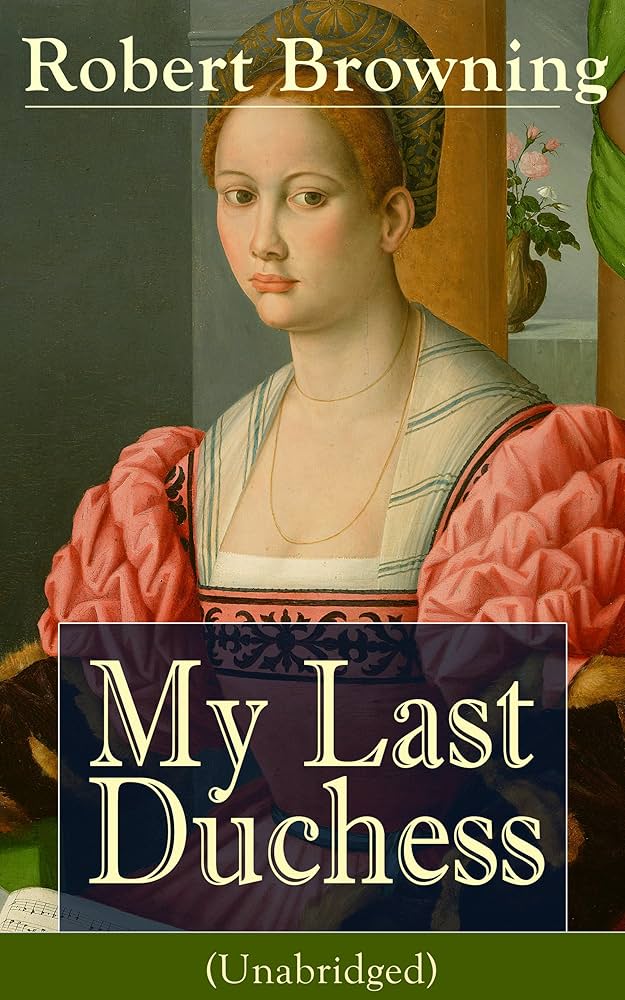

The Duchess does not physically appear in the poem My Last Duchess by Robert Browning. Through the Duke’s dramatic monologue, certain aspects of her character are indirectly revealed. Naturally, her character is viewed from the perspective of the Duke, who is critical of her graceful and generous nature rather than appreciative of her virtues. Although the Duchess remains silent throughout the poem, her personality emerges vividly from her husband’s description.
The Duchess was, no doubt, a lady of beauty and grace. She was good-natured, simple, and frank. She possessed genuine sincerity and was accommodating, never rude or discourteous to anyone. The Duke himself acknowledges her cheerful disposition:
She had
A heart—how shall I say?—too soon made glad,
Too easily impressed; she liked whate’er
She looked on, and her looks went everywhere.
This suggest that the Duchess was easily delighted by the beauty and pleasures of everyday life. She was enthusiastic about everything, even seemingly insignificant matters. She readily expressed her happiness and was easily impressed by the kindness of others. She did not possess the aristocratic pride, vanity, or possessiveness that characterised her husband. Indeed, she was entirely different from the Duke in her attitude towards life. Her appreciation of ordinary pleasures becomes evident when the Duke remarks:
The dropping of the daylight in the West,
The bough of cherries some officious fool
Broke in the orchard for her, the white mule
She rode with round the terrace—all and each
Would draw from her alike the approving speech,
Or blush, at least.
The Duchess’s innocent delight in nature, simple gifts, and everyday experiences is evident here. Unlike her husband, who measured everything according to social status and aristocratic prestige, she valued the spontaneous pleasures of life. Her appreciation of a sunset, a branch of cherries, or a ride on a white mule reflects her sensitive and affectionate personality.
Another significant aspect of the Duchess’s character is her humility and freedom from social prejudice. Despite belonging to an aristocratic family, she treated people with kindness and respect, irrespective of their social positions. She did not reserve her smiles and gratitude exclusively for her husband. This attitude particularly offended the Duke, who proudly declares:
She thanked men,—good! but thanked
Somehow—I know not how—as if she ranked
My gift of a nine-hundred-years-old name
With anybody’s gift.
The Duke regarded his ancient family name as a privilege that should have commanded the Duchess’s special gratitude and admiration. However, the Duchess did not consider aristocratic status more valuable than genuine human affection. Her equal appreciation of others’ kindness demonstrates her humility and generosity. What the Duke perceived as disrespect towards his noble ancestry may instead be understood as evidence of her natural goodness and freedom from aristocratic arrogance.
The Duchess also emerges as a tragic symbol of female innocence and vulnerability under patriarchal authority. Her cheerful personality and independent emotional responses were unacceptable to her authoritarian husband. The Duke expected her to behave according to his rigid standards of aristocratic conduct. However, instead of communicating his dissatisfaction, he chose to exercise his absolute power over her. His chilling declaration reveals the tragic consequences:
This grew; I gave commands;
Then all smiles stopped together.
The Duke ordered the Duchess’s death because he could not tolerate her spontaneous expressions of happiness. Her innocent smiles, which once reflected her affectionate personality, became the very reason for her destruction. Ironically, the Duke now possesses complete control over her painted image, which remains hidden behind a curtain that only he can draw. Thus, the Duchess becomes a victim of masculine pride, jealousy, and possessiveness.
The Duchess was tender, gentle, amiable, and obliging towards everyone. However, her husband’s distorted judgement transformed these admirable qualities into supposed faults. Her tragic fate exposes the cruelty of a possessive and tyrannical aristocrat who valued social prestige and absolute authority above human affection. Although the Duchess never speaks directly in the poem, her innocence, kindness, and generosity remain evident through the Duke’s own words. We can conclude that Browning presents the Duchess as a sympathetic figure whose tragic destruction reveals the destructive consequences of patriarchal domination, aristocratic pride, and obsessive possessiveness.
Also read: Lyric Poetry: Definition, Characteristics and Examples