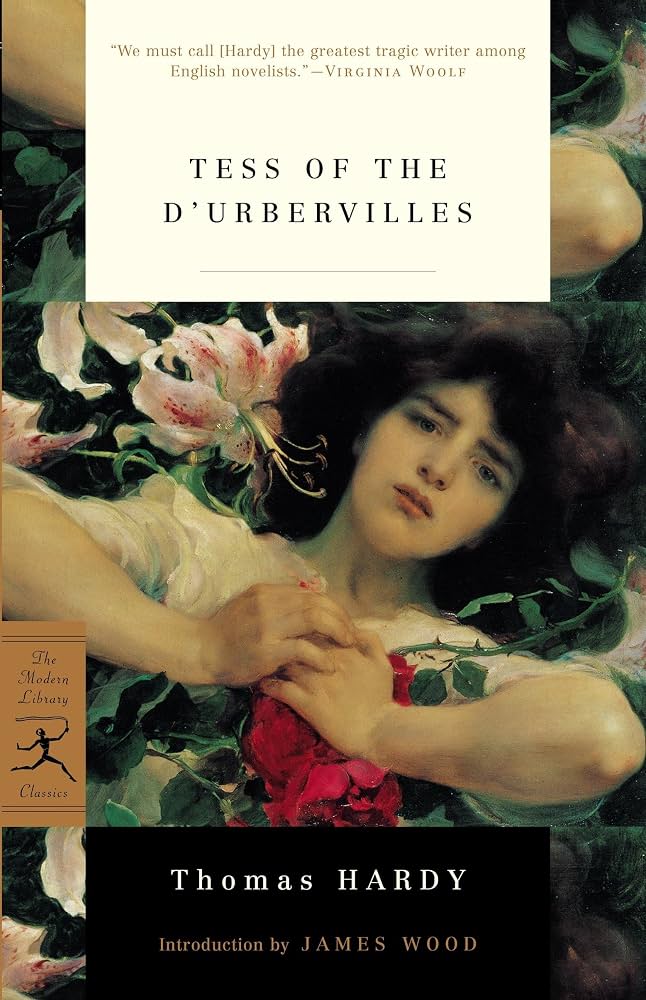

Thomas Hardy’s subtitle “A Pure Woman” in Tess of the d’Urbervilles is a deliberate challenge to conventional Victorian ideas of female purity and morality. It created trouble from the first for invoking purity in connection with a career that includes not simply seduction but collapse into a state of a kept woman and murderess. It is completely against the conventional Victorian morality. A typical Victorian moralist would question how Tess, by Hardy’s moral standard, maidenhood and purity are not synonymous. So, Tess loses her purity only in a physical sense, but spiritually remains pure till death. Any unbiased reader, free from any conservative moral code, will feel fully convinced of it.
In nineteenth-century Victorian society, a woman’s chastity was often regarded as the sole measure of her worth, whereas men were judged far more leniently. Through Tess, Hardy exposes this injustice. Alec’s predatory behaviour is tolerated by society, but Tess, who is the victim, bears the entire burden of shame and social condemnation. By calling her “A Pure Woman”, Hardy forces readers to question whether morality should be based merely on social conventions or on inner character, intention, and suffering.
Hardy introduces Tess with a childlike innocence: “As she walked along today, for all her bouncing handsome womanliness, you could sometimes see her twelfth year in her cheeks, or her ninth sparkling from her eyes; and even her fifth would flit over the curves of her mouth now and then.” In the May dance, Tess appears wearing a white dress – the colour white, which instinctively associates her with purity.
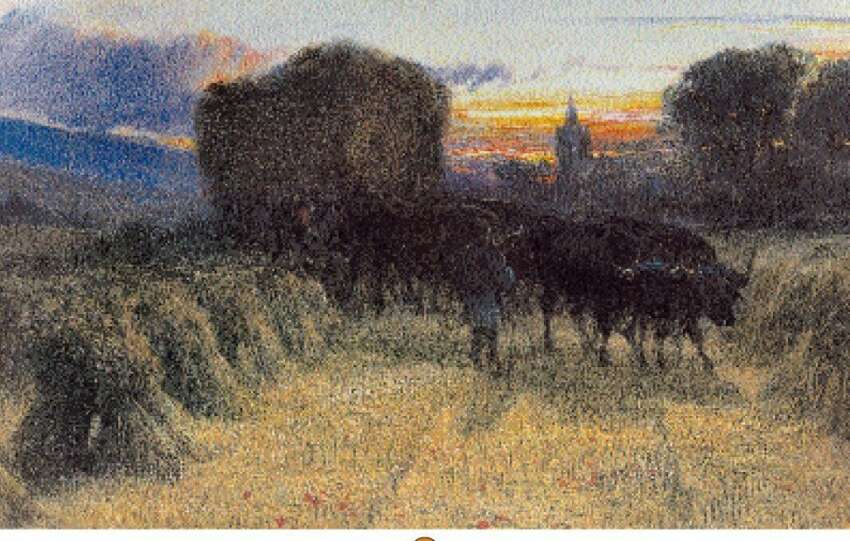
Nature repeatedly appears as a silent witness to Tess’s innocence. Hardy surrounds her with images of fields, birds, flowers, and changing seasons. She feels most at home in the natural world, especially at Talbothays Dairy, where her beauty seems to merge harmoniously with the landscape. The purity associated with Tess is therefore not ecclesiastical or legalistic; it is organic and natural. Hardy implies that Nature does not condemn Tess for the violation committed against her. Rather, it continues to nurture and shelter her, suggesting that her essential self remains unstained.
The entire question of the loss of her purity is based on her relationship with Alec her being seduced by him, her eventual surrender to him when she becomes his mistress and her murdering Alec. Alec is attracted by her face and figure at the first sight. But Tess in no way encourages him in his amorous advances. From the very beginning, she shows a natural modesty and a chaste independence of mind and body. She is distressed when Alec feeds her with strawberries; she wipes off the kiss he gives her. She strongly decides to walk the last few miles rather than sitting next to him in the carriage. There is nothing at all of the flirt in Tess; her manner is reticent and reserved rather than free and familiar. Both mentally and physically, she is purely virtuous at this stage.
But it is because of the rape of Tess by Alec that her purity is called into question. Though Hardy never gives a detailed account of the incident, we’re given enough hints about her helpless surrender to her seduction by Alec. Without condemning it, Hardy views it from his unconventional moral viewpoint and thus considers it to be a necessary experience of Tess. Earlier, she was “a mere vessel of emotions untinctured by experience”. She blames her mother, “I was a child when I left this house four months ago. Why didn’t you tell me there was danger in men folk? Why didn’t you warn me?” We would not have found her as a woman of great strength, had she not encountered this grim but ennobling experience. It is paradoxical that this seduction has made her a fitting counterpart to high-minded Angel Clare. Then Tess changed from a simple girl to a dignified woman. She became “a fine creature” with a reflectiveness in her face and a note of tragedy in her voice.
What is more important for Hardy is that Tess never surrendered her heart; her heart was almost unaware of what is happening. But the morally depraved Angel Clare can’t understand Hardy’s concept of this morality. Listening to her past sexual experience, Angel no longer considers Tess morally “pure”. Because he does not understand the true meaning of purity, he causes immense suffering not only for Tess but also for himself. It is because of Angel’s disapproval of Tess that she ultimately becomes a kept woman of Alec. It is society that has condemned Tess as unchaste and unclean. Hardy clearly suggests that Tess is “pure” not only by any absolute human standards but also by the exacting standard of Nature. In Nature, there is no such artificial and unwholesome double standard as the one employed by Victorian society and blindly accepted by the stupid Angel Clare.
Another significant aspect of the subtitle is that Tess never becomes morally hypocritical. She refuses to conceal her past from Angel Clare even though silence might have secured her happiness. Her confession on the wedding night shows extraordinary honesty and moral courage. In this sense, Tess is purer than many socially respectable characters who hide their weaknesses behind outward propriety. Hardy here associates purity with truthfulness, sincerity, and fidelity to one’s conscience, not with the preservation of physical virginity.
Tess’ murder of Alec has nothing to do with purity. It is only this man who has been instrumental in bringing about her destruction. Cunningly, Alec compelled her to stay with him even after the seduction and to carry on the sexual relationship. So, only by Alec’s death could that physical claim be obliterated; only by killing him could she finally repudiate all that he had done. Thus, even when Tess commits the murder, her heart still remains quite “pure”. Even Angel Clare, who earlier behaved as the very embodiment of the conventional morality, now comes to realise that “the beauty or ugliness of a character lay not only in its achievement but in its aims and impulses, its true history lay not among things done but among things willed.
The paradox in the sub-title perhaps works on some other plane. Tess, being a ‘simple’, ‘passionate girl ‘, is always at the mercy of her male partners who overpower her whenever they please. But we can’t label Tess as a meek martyr: Tess is pure not only in her passions, being true to Angel to the end of her life, but also pure in her resilience. Tess does not take her defeat meekly when she meets it. Till the end, she keeps her head high and her spirits alive. She is “pure” for she is true to her own being, her vital being.
The subtitle in this novel creates a deep tragic irony. Readers know from the beginning that Tess will be judged harshly by the society in which she lives. Every subsequent event, i.e., the seduction, the death of her child, Angel’s rejection, and her return to Alec, deepens the contradiction between what Tess truly is and what society believes her to be. Hardy intentionally maintains this tension throughout the novel so that the subtitle becomes both a defence of Tess and an indictment of the social order that destroys her. The tragedy lies in the fact that a woman whom the author considers spiritually pure is relentlessly treated as impure by the world around her.
The subtitle “A Pure Woman” is significant because Hardy redefines purity as an inward quality of truthfulness, love, endurance, and harmony with Nature. Although Tess is condemned by social and religious conventions as a “fallen woman,” Hardy presents her as spiritually innocent and morally superior to many of the supposedly respectable characters around her. The subtitle becomes both as a defence of Tess and a powerful critique of Victorian moral hypocrisy.
Read also: Character of Wife of Bath in Chaucer’s Prologue to the Canterbury Tales