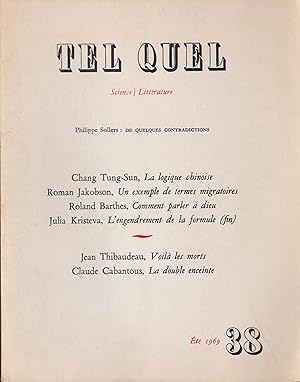
In 1960 the French novelist and critic Phillipe Sollers (1936-) founded the literary periodical Tel Quel, and later he outlined its objectives in his discourse Logiques (1968). The aims are basically ideological and activist, as well as aesthetic. One of its aims is to restore to language its original revolutionary power, and it advances the principle that ‘literature…
The term ‘Ideology’ was coined by the French philosopher Antoine Destutt de Tracy, who conceived it in 1796 as the “science of ideas” to develop a rational system of ideas to oppose the irrational impulses of the mob. Ideology is a set of beliefs, convictions, or ideas that both bind a particular group of people…
Definition:
Hyperbaton is a figure in which there is an inversion of the regular grammatical order of words in a sentence for the purpose of emphasizing an idea or fact. Hyperbaton is also called Inversion.
Thus, the sentence, ‘I have seen much’, may be inverted in this way, ‘Much have I seen’ to make this more…
The Prague Linguistic Circle (PLC) was a group of linguists and scholars founded in Prague, Czechoslovakia (now the Czech Republic) in 1926. It was initially formed by a group of linguists who were dissatisfied with the prevailing approaches to language study at the time, particularly the dominant historical-comparative linguistics. They sought to establish a new…
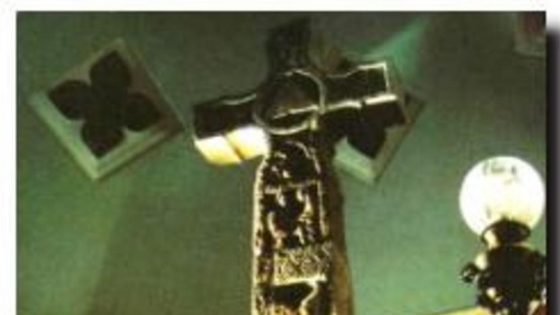
The Dream of the Rood is one of the famous Anglo-Saxon Christian poems. This poem is short and contains 146 lines only. It is generally attributed to the greatest Anglo-Saxon Christian poet, Cynewulf, although there are other conjectures, too. Probably Cynewulf wrote the poem, but not the whole one. As there is variety in the…
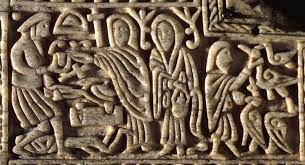
“The Complaint of Deor,” also known as “Deor’s Lament,” is an Old English poem that dates back to the 10th century. It is a short poem and contains only 52 lines. It is a personal lamentation attributed to Deor, a scop (poet) in Anglo-Saxon England. The poem recounts Deor’s misfortunes and compares them to those…
In the English literature of the present century, Somerset Maugham is a big name. As a novelist, dramatist, and storyteller, his genius remains indisputable. His stories exhibit remarkably his inexhaustible creative urge, which is manifested equally in content and form, in theme and technique.
The Lotus Eater, for instance, is a simple yet impressive short story…
Definition:
‘Tragi-Comedy’, as the very name signifies, is a mingling of the seriousness of tragedy and the pleasantry of comedy. It is both tragedy and comedy, padded together into one new form. It is, in essence, a tragedy, in its very atmosphere, but has a characteristic happy ending of a comedy. Tragi-comedy, indeed, implies a happily…
The one-act play, as the name suggests, is a play performed in a single act, and that distinguishes it from regular plays that are typically divided into multiple acts. This format suits the modern age’s need for quick entertainment, offering audiences an opportunity to enjoy a complete dramatic experience in a short time. The one-act…
In the novel Surfacing by Margaret Atwood, two narrative innovations are worth particular mention: Atwood’s unreliable narrator and her use of poetry in a work of prose fiction. Most of Atwood’s first-person narratives are characterized by a particular kind of unreliable narrator: one who seems to be a wonderfully reliable observer of details but who is…