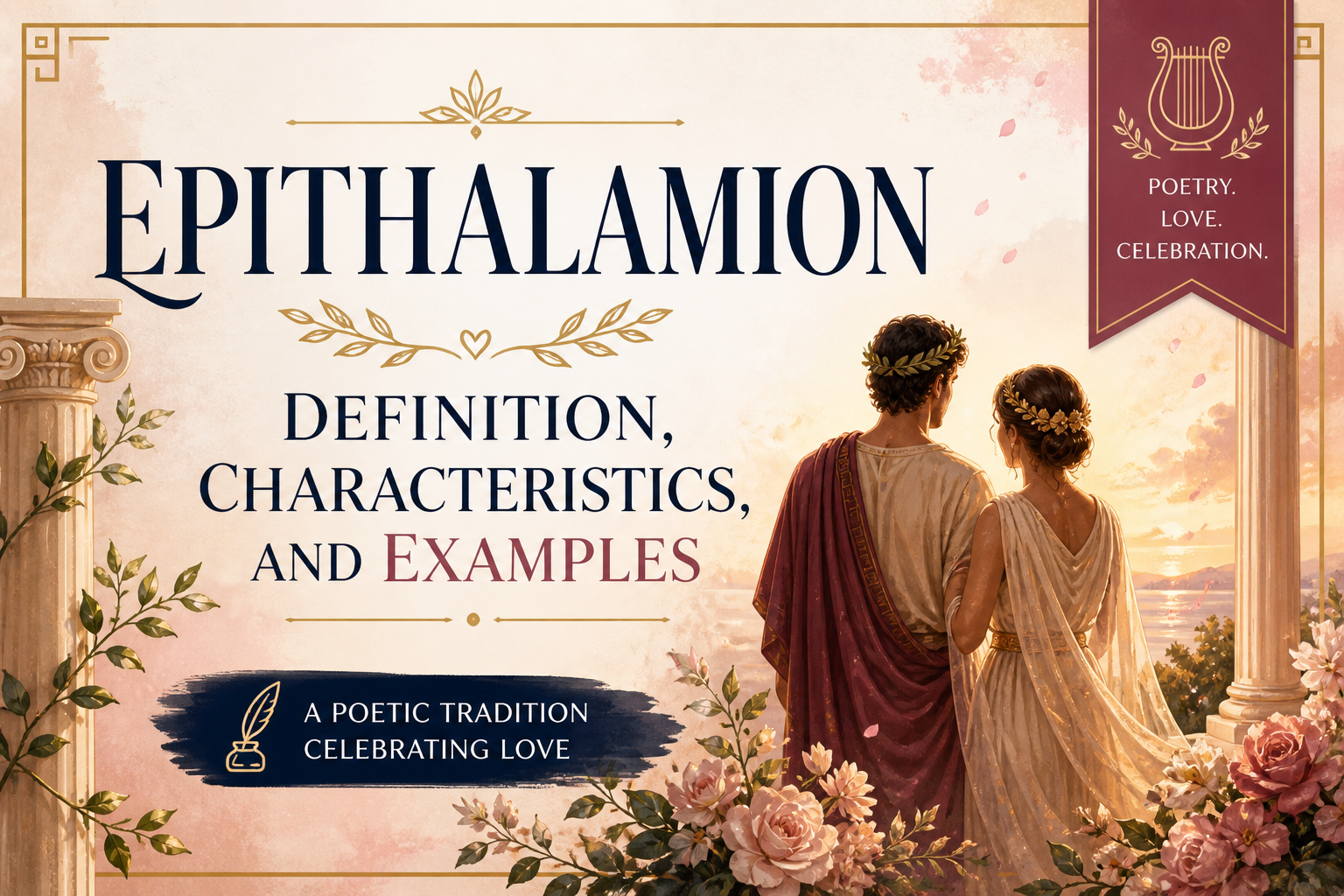

An epithalamion (from Greek, meaning “at the bridal chamber”) is a lyrical poem or song composed in celebration of a wedding, traditionally sung outside the bride’s chamber on the wedding night. It is one of the oldest poetic forms associated with marriage rituals.
The form is believed to have originated with the Greek poet Sappho. It was later developed by poets like Theocritus and, in Latin literature, by Catullus. Anacreon, Stesichorus, and Pindar are also regarded as masters of this form. During the Renaissance, the epithalamion was revived and flourished in Europe. In England, major contributors include Sir Philip Sidney, Edmund Spenser, John Donne, and Ben Jonson.
One of the finest examples is Epithalamion by Edmund Spenser, written in 1594, possibly to celebrate his own marriage. Later poets like Percy Bysshe Shelley and Alfred Lord Tennyson also used the form, though it gradually declined after the Restoration period.
Characteristics of Epithalamion:
- It celebrates the marriage of a bride and groom, often praising their beauty, love, and union.
- The poem usually follows a chronological structure, depicting the wedding day, the ceremony, and the night.
- It includes blessings and wishes for fertility and prosperity.
- Use of mythological references, especially to Hymen (god of marriage), is common.
- Rich imagery from nature—flowers, spring, and light—symbolises joy and new beginnings.
- It has a musical and lyrical quality, often with refrains, as it was originally meant to be sung.
- The tone may be both celebratory and sacred, blending physical love with spiritual union.
In conclusion, the epithalamion is a significant lyrical form that combines ritual, celebration, and poetic beauty to honor the institution of marriage, with Edmund Spenser’s Epithalamion standing as its most celebrated example.
Also read: Discuss Epanaphora: Definition, Meaning and Examples